

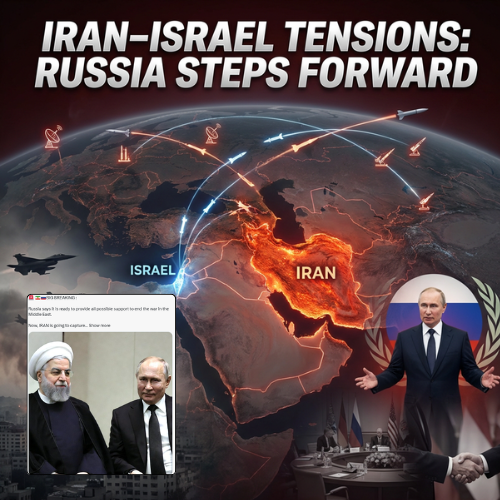
Russia Mediation in Middle East: What the Iran-Israel Conflict Means for Global Stability
The Russia mediation Middle East is once again at the center of global attention. Over the past few days, tensions between the United States, Israel, and Iran have escalated significantly, raising concerns that the situation could develop into a much larger conflict in the region. Military strikes, political warnings, and growing international concern have created an atmosphere of uncertainty across the Middle East.
Amid this rising tension, another major global player has stepped into the conversation. Russia has signaled that it may be willing to help reduce tensions and possibly mediate between the parties involved. However, before discussing Russia’s potential role, it is important to understand what is currently happening in the region and why the situation is drawing worldwide attention.
A Region on Edge
According to reports coming from the Russia mediation Middle East , several areas connected to Iran have recently been targeted by military strikes. In response, Iran has launched missile attacks and activated its air defense systems in different parts of the country.
In Tehran and several other cities, loud explosions were reported overnight, immediately raising concerns about the scale of the confrontation. While information from conflict zones is often difficult to verify in real time, it is clear that the situation has become far more serious compared to just a few weeks ago.
Even relatively small military exchanges in this region can have consequences far beyond national borders. That is why governments and analysts around the world are closely monitoring every development.
Iran’s Message: No Ceasefire for Now
Iranian officials have made their position quite clear. According to statements from senior leaders, Iran is not currently interested in discussing a ceasefire.
Their message is straightforward: if attacks continue, Iran will continue responding.
Military representatives have also stated that their missile systems remain active and prepared. From Iran’s perspective, demonstrating military strength is seen as necessary both for national defense and for maintaining political credibility at home and abroad.
Some analysts believe Iran may be preparing for a prolonged confrontation rather than a short conflict. Extending the crisis could increase diplomatic pressure on its opponents over time.
The Perspective of the United States and Israel
For the United States and Israel, the situation is closely connected to regional security concerns. Both countries argue that their actions are intended to prevent potential threats and maintain stability in a region that has long experienced geopolitical tensions.
One of their biggest concerns is the Strait of Hormuz, a narrow but extremely important maritime route that plays a crucial role in global energy supply.
A significant portion of the world’s oil shipments passes through this waterway every day. Because of this, any threat to the Strait of Hormuz quickly attracts global attention. Even a temporary disruption in oil shipments could impact energy markets worldwide.
Could Energy Politics Be Part of the Conflict?
Whenever tensions rise in the Middle East, discussions about energy politics naturally follow. Iran possesses some of the world’s largest oil and natural gas reserves, making it a key player in the global energy system.
Some experts believe that geopolitical competition over energy influence cannot be completely separated from broader political tensions.
Iranian officials have occasionally suggested that economic interests may also be influencing the pressure they face. However, U.S. authorities have rejected these claims and maintain that their primary concern is maintaining regional security.
Russia’s Diplomatic Signal
In the midst of this complicated situation, Russia has indicated that it is willing to help address the crisis through diplomatic channels.
Russian President Vladimir Putin has stated that long-term stability in the region cannot be achieved through military confrontation alone. According to Russia, dialogue and negotiations remain the only realistic path toward lasting peace.
Russia’s position is particularly interesting because it maintains strategic relations with Iran while also engaging with other regional actors. This combination could allow Moscow to play the role of a mediator if all parties are willing to participate in negotiations.
Why Russia’s Offer Matters
Russia’s proposal has attracted attention for several reasons.
First, Russia is a major global power with significant influence in international diplomacy. Any initiative from Moscow could potentially affect the direction of the crisis.
Second, conflicts in the Middle East often influence global energy markets. Historically, tensions in oil-producing regions tend to push oil prices higher. As a major energy exporter, Russia could indirectly benefit from such developments.
Third, if Russia successfully brings opposing sides to the negotiating table, it could strengthen its image as a powerful diplomatic actor on the global stage.
The Problem of Online Rumors
As tensions rise, social media has also been flooded with speculation and unverified claims.
Some posts suggest that the conflict could escalate into a global war or lead to major territorial changes in the region. Others claim that several countries may soon become directly involved in the conflict.
However, many of these claims lack reliable evidence. Experts warn that misinformation often spreads quickly during geopolitical crises and can create unnecessary fear and confusion.
Economic Ripple Effects
Even before the situation escalates further, global markets are already reacting.
Energy prices often fluctuate whenever instability appears in the Middle East. Investors are closely monitoring developments because disruptions in the region can quickly affect global supply chains and transportation costs.
If tensions continue to rise, the economic impact could extend far beyond the Middle East, affecting industries, inflation, and international trade.
What Comes Next?
For now, the future of the conflict remains uncertain.
If diplomatic efforts by major global powers—including Russia—gain momentum, negotiations could begin and the situation might gradually de-escalate.
However, if military exchanges intensify or additional countries become involved, the conflict could expand into a broader regional crisis.
At the moment, the international community continues to watch closely, hoping that diplomacy will have a chance to prevent further escalation.
Conclusion
The rising tensions between the United States, Israel, and Iran highlight the complexity of modern geopolitics. Security concerns, energy resources, and international alliances are all deeply interconnected.
Russia’s willingness to step forward as a potential mediator adds another layer to an already complicated situation.
The coming weeks will likely determine whether the Middle East moves toward diplomatic negotiations and stability—or faces another major geopolitical crisis.







Comments